
The Missing Mineral: Why This Secret to Your Pet’s Energy Might Be Hiding in the Treat Cupboard
As British pet parents, we are fiercely protective of our furry family members. We obsess over the quality of their food, double-check labels, and spend hours choosing the right premium kibble, wet food, or fresh diet at the pet shop. I don’t know about you guys, but I spend more time making sure that our animals are catered for nutritionally than I do us humans! But there’s one essential trace mineral working quietly behind the scenes that deserves a major spotlight: Iron.
While it is only needed in small amounts, optimal iron levels play a foundational role in your pet’s daily energy, mood, and long-term health. Let's look at what iron actually does for our dogs and cats, how to recognise when they might be lacking a bit of sparkle, and what recent UK-relevant veterinary science says about keeping their levels perfectly balanced.
What Does Iron Do for Your Pet's Body?
Think of iron as the core fuel that keeps your pet's basic biological "engine" running smoothly. Without it, they simply won't have the puff, stamina, or vitality they need for everyday adventures.
Oxygen Delivery: Iron is the main building block of haemoglobin (found in red blood cells) and myoglobin (found in muscle cells). Think of haemoglobin as a microscopic delivery van transporting life-giving oxygen from the lungs straight to your pet's vital organs. Myoglobin stores that oxygen within the muscles, giving your dog the stamina to chase a ball across the garden or your cat the power to leap effortlessly onto the kitchen counter (and our three certainly don’t lack the ability to do this!).
Energy Production: Beyond oxygen transport, iron acts as a tiny cellular spark plug. It activates the metabolic enzymes responsible for turning food nutrients into usable, everyday energy.
Immune Strength: Iron is required for the body to quickly create and mature immune cells. A pet with healthy iron levels is far more capable of fending off seasonal bugs or environmental pathogens (harmful microorganisms like bacteria, viruses, or fungi that can cause illness).
The Warning Signs: Spotting Iron Deficiency
When a dog or cat does not absorb enough iron, or loses it faster than they can replace it, they develop a condition known as iron deficiency anaemia.
Veterinary scientists tracking these issues note that severe iron deficiency in pets causes highly specific changes in their red blood cells. It makes the cells microcytic (unusually small) and hypochromic (pale due to a lack of iron-rich haemoglobin).
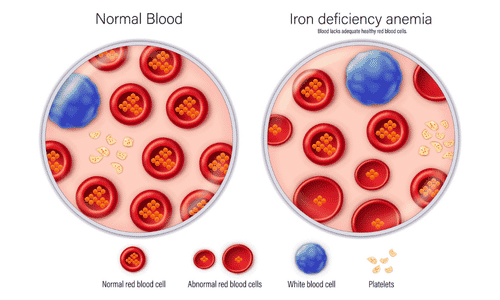
Because our pets are incredibly tough, they often adapt to slow drops in iron over weeks or months, hiding their symptoms until the deficiency becomes quite severe. Keep a sharp eye out for these tell-tale signs at home:
Lethargy and Exercise Intolerance: Your dog suddenly flags halfway through their usual walk or refuses to go as far, or your cat completely stops jumping onto their favourite high perch.
Pale Gums: A healthy pet's gums should be a vibrant, healthy "bubble-gum" pink. Gently lift your pet's lip to check. If the gums look stark white, greyish, or a washed-out light pink, it is an immediate red flag that requires an urgent vet visit.
Platelet Spikes: Recent UK veterinary data from the Royal Veterinary College confirmed that when a dog's body is fighting chronic illness or losing blood behind the scenes, it heavily disrupts their iron levels and triggers changes in their blood counts (Hodgkiss-Geere et al., 2019). This is a crucial marker your vet will look for on a routine blood test to see if a lack of iron is disrupting things behind the scenes.
Please note: If in doubt about your pet’s health, a veterinary professional should always be your first point of contact. Please do not rely on blog posts and social media for veterinary advice.
What UK Pet Parents Need to Know About Diet
In the UK, commercial pet food standards are guided by FEDIAF (the European Pet Food Industry Federation), which sets strict rules on the minimum nutrients required in commercial food. For instance, adult dog food must contain a specific baseline of iron to be safely labelled as a "complete" diet.
A landmark nutritional study conducted by UK researchers at institutions including the University of Nottingham analysed commercially available dry foods in the UK market. They discovered that while standard meat-based and plant-based dry dog foods generally met or heavily exceeded the basic requirements for iron, specific specialised formulations, such as certain veterinary renal (kidney) diets, scored significantly lower on iron content (Brociek et al., 2024). This is why it's so important to work closely with your vet if your pet has to be on a prescription therapeutic diet.
Fortunately, iron deficiency rarely happens purely from a "bad diet" alone if you feed a standard complete commercial food. In adult dogs and cats, true iron deficiency is almost always caused by chronic blood loss. The most common UK culprits include severe flea or tick infestations, heavy intestinal worm loads, or hidden internal bleeding from tummy issues.
Give Your Pet a Natural Iron Boost (The Pure Way!)
If you want to give your pet a natural health boost via healthy, real-food treats, you want to focus on animal-based "heme" iron. This is the easiest type of iron for their bodies to absorb and put straight to work.
The Wulver’s Gift have made it incredibly easy to do just that. We offer FIVE 100% pure liver treats that serve as some of the most concentrated, natural sources of bioavailable iron on the market - no synthetics, just pure energy:
Ox Liver (Hypoallergenic, what a bonus!)
Goat Liver for Dogs (Hypoallergenic as well!)
Goat Liver for Cats (Hypoallergenic!)
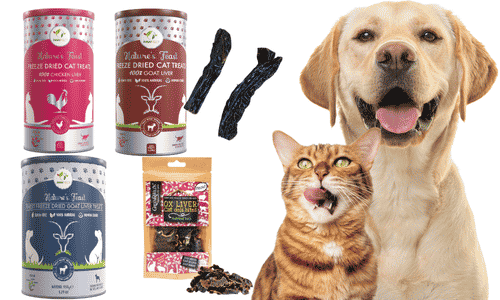
And here is a handy little insider tip for shopping our range: it doesn't matter if the product is marketed for dogs or cats, 100% liver is still 100% liver no matter what animal is on the packaging! 😉 Whether you have a picky feline or a sensitive pup, these pure single-protein treats are the perfect match.
A quick note on safety: Always stick to natural food sources or treats like ours. Never give your pet human iron supplements, as excess iron cannot be easily processed by dogs or cats and can lead to dangerous poisoning.
References
Brociek, R. A., Li, D., Broughton, R., & Gardner, D. S. (2024). Nutritional analysis of commercially available, complete plant- and meat-based dry dog foods in the UK. PLOS One, 19(11), Article e0328506. https://doi.org/10.1371/journal.pone.0328506
Hodgkiss-Geere, H. M., Gunn-Moore, D. A., Corcoran, B. M., Whitelaw, B., & Argyle, D. J. (2019). Characterization of iron status and its association with inflammation and chronic kidney disease in UK dogs. Journal of Small Animal Practice, 60(11), 673–681.
